- Home
- About Us
- Projects
- Products
- Research
-
A Techno-Economic Feasibility Study for Integration of Satellite Technology in Agriculture for Uganda.
Mulumba, A. M. ., & Tusubira, D. . (2026). American Journal of Smart Technology and Solutions, 5(2), 74-92.
-
- Contact Us
WorkShop Recap
Nile Orbital AeroSpace Introduces Ugandan Students to the Space Sector in Five-Day Online Workshop
Secondary school students learned from Ugandan space professionals and put their skills to the test in a closing hackathon.
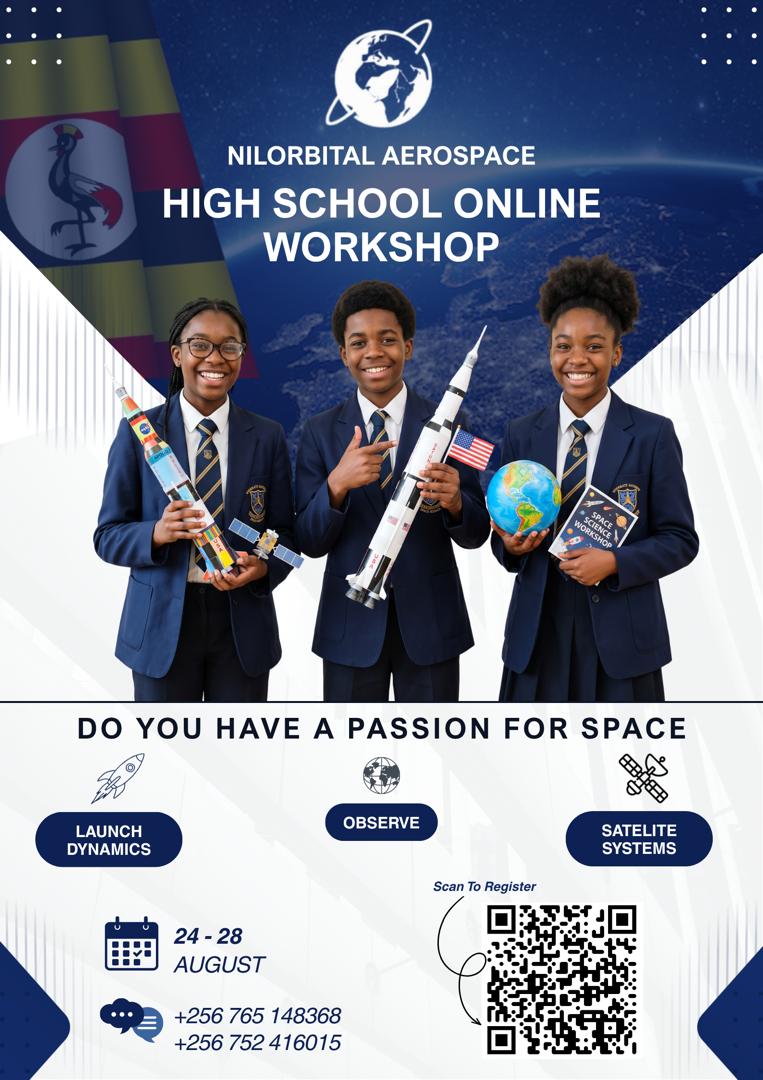
Nile Orbital AeroSpace has completed its High School Space Education Programme, a five-day online workshop that introduced 25 secondary school students across from ACE, UNEB and Cambridge curricula to explore space science.
The workshop ran from 24 to 28 August 2026, with sessions held online each evening from 5:00 to 7:00 p.m. It was open to students from Senior 1 to Senior 6, on both national and international curricula, and no prior knowledge of space science was required.
Why the workshop matters
Awareness of space science and technology among Ugandan secondary school students remains limited, and few schools offer practical enrichment programmes in the field. Nile Orbital AeroSpace, a Ugandan private space technology company working on satellite systems, propulsion and other space technologies, designed the programme to change that by showing students what a career in space can look like, and by putting them in front of Ugandan professionals already working in it.
The workshop comes at a time of growing investment in earth observation and space research in Uganda, as universities, research institutions, private companies and government agencies take part in international collaborations that build local expertise in satellite engineering, remote sensing and aerospace technologies.
Five days, from careers to the cosmos
Each day combined expert talks, short videos and clips of astronauts, and break-out room discussions where students prepared for the final presentations.
- Day 1: Careers and the space sector. Alvin Michael Mulumba introduced general space knowledge and the range of space careers, while David Tusubira spoke on Africa's involvement in space and the companies shaping the "new space" industry.
- Day 2: Space science. Patience Namugwanya covered planetary systems, astronomy, astrobiology and astrophysics, and Alvin Michael Mulumba led a session on human performance in space, including astronauts and space medicine.
- Day 3: Space hardware. Rosemary Nalwanga explained how satellites are built, from the platform and payload to assembly, integration and testing, and Ryan Sendege covered launch systems and ground stations.
- Day 4: Satellite applications and space law. Alvin Michael Mulumba explored remote sensing and navigation, and Saphirah Kabakurungi introduced space policies and regulations.
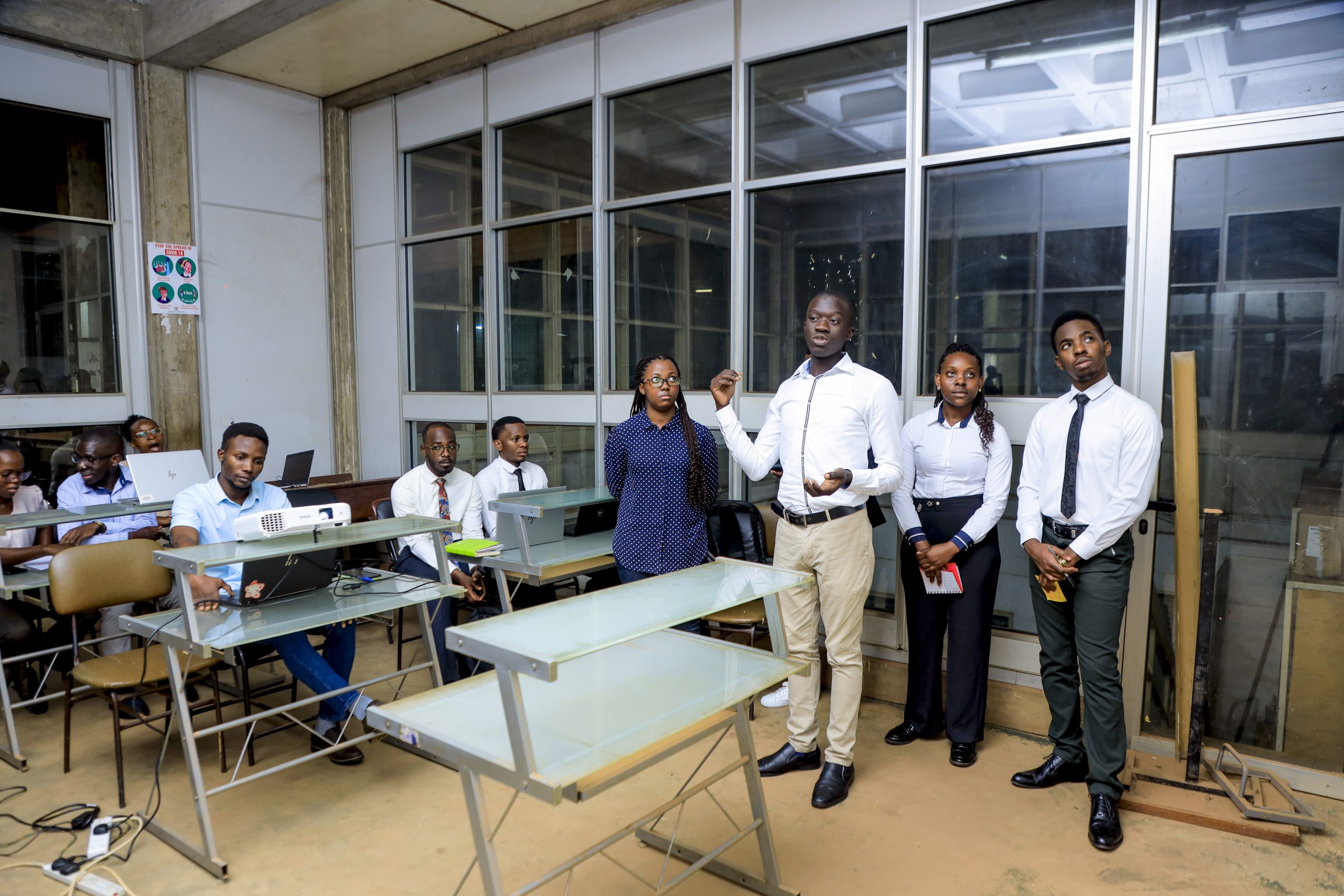
- Day 5: Hackathon and presentations. Student teams presented their hackathon projects to a panel of judges drawn from the instructor team, followed by feedback, awards and a closing address from Nicholas Katongole.
Break-out sessions throughout the week were facilitated by Zoora Harrison, who also hosted the final presentations and awards.
What students took away
By the end of the week, participants were expected to understand the principles of space science, the major components of a satellite, the uses of space applications and the basics of space law. They also learned about the careers available in the space industry, gained an appreciation of Africa's growing space ecosystem, and built teamwork, problem-solving, creativity and design skills.
Related Posts
Projects
Satellite technology in Agriculture
This research project, a collaborative effort between Dojo Hub (SMC)…